

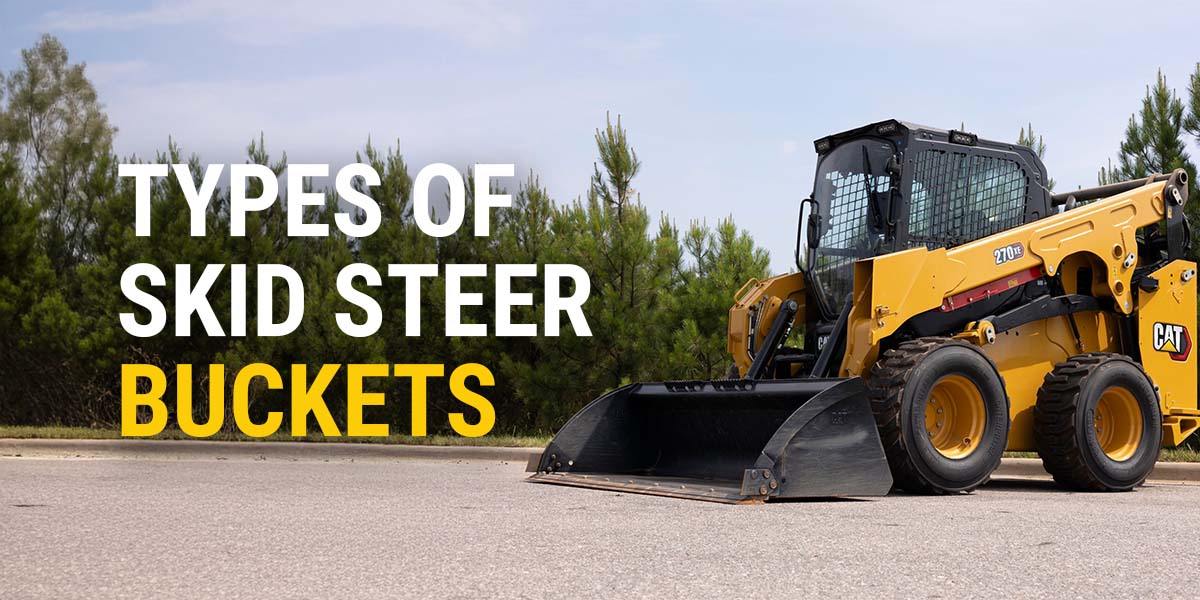
Types of Skid Steer Buckets
Matching the right skid steer bucket to your material and machine capacity improves productivity and lowers long-term ownership costs. On demanding jobsites, an unsuitable attachment lengthens operating cycles, increases fuel consumption, accelerates equipment wear, and limits overall efficiency.
Contractors and landscapers often face uncertainty when choosing a bucket because a skid steer’s versatility depends heavily on the attachment. This guide compares the different skid steer bucket types, exploring how each option supports specific tasks and applications.
For Digging and General Use
General-purpose, dirt, and tooth skid steer buckets support most daily construction and landscaping operations. Contractors use these attachments for loading, carrying, light excavation, and grading tasks. Designed to balance strength with visibility, each bucket type delivers dependable performance in a wide range of jobsite conditions.
General-Purpose Buckets
Built for light excavation, loading, and carrying in soil, gravel, and mixed debris, general-purpose buckets are the standard versatile attachment. During daily work that shifts between material movement and light digging, they maintain productivity without frequent attachment changes. Consistent performance in changing conditions makes the bucket a practical choice for routine operations.
Benefits include:
- These buckets deliver a strong breakout force to dig and load efficiently in standard ground conditions.
- They offer flexibility with bolt-on edge options, allowing quick transitions between smooth grading and aggressive digging.
- They scale across different machine sizes, enabling standardization on a single bucket style for multiple pieces of equipment.
Utility Buckets
Utility buckets with bolt-on cutting edges support grading, leveling, and finish work. The moderate capacity of these buckets favors control and visibility rather than maximum volume. Choose these buckets when achieving smooth, accurate results matters more than moving the largest possible loads in a single pass.
Benefits include:
- Moderate capacities — 62-74 inches, 0.56-0.68 yd3, 529-609 pounds — improve visibility of the cutting edge for consistent grading.
- The bolt-on cutting edge collects material cleanly and is easily replaceable.
- Reinforced construction supports daily use without added weight, which reduces operating capacity.
Tooth Buckets
When you need aggressive penetration into hard, compacted, or rocky ground, tooth buckets deliver where smooth-edged buckets stall or require multiple passes. Tooth buckets are a strong choice for initial excavation, root removal, and breaking up tough material before operators switch to a smooth edge for finishing.
Benefits include:
- Teeth break up material on contact, improving fill speed.
- Replaceable teeth and shanks lower long-term maintenance costs.
- Bolt-on tooth bars allow quick switching between digging and grading.
For Lifting and Hauling
Light material and snow buckets prioritize moving maximum volumes of low-density materials. The designs focus on decreasing the total number of cycles, lowering fuel consumption, and reducing labor hours required for high-volume tasks.
Snow and Light Material Buckets
Light material buckets handle high-volume movement of low-density materials such as mulch, wood chips, compost, and snow. These lightweight buckets emphasize capacity and clean release rather than digging strength. When you need a bucket to move the largest volume of light material per pass, choose one of these.
Benefits include:
- Extended widths and heights deliver higher capacities — 74-98 inches, 0.9-1.22 yd3 — than standard buckets.
- Lightweight construction helps maintain machine balance and rated operating capacity.
- Wider dimensions reduce spillage during transport.
- Smooth interiors and bolt-on edges promote complete material release.
For Sorting and Specialized Tasks
Multipurpose, grapple, and rock buckets address specific challenges, such as securing unstable loads or performing multiple functions with one tool. Their multifunctional nature can reduce the need to bring additional machines to the jobsite.
Rock Buckets
Rock buckets use spaced tines to sift soil while retaining large rocks and debris. Their open design provides visibility to avoid damaging objects, making them ideal for landscaping operations that involve ground preparation.
Benefits include:
- On-site separation reduces hauling and manual sorting time.
- An open back improves the visibility of objects that could damage tires.
- These buckets are effective for fence line clearing, root removal, and demolition cleanup.
Grapple Buckets
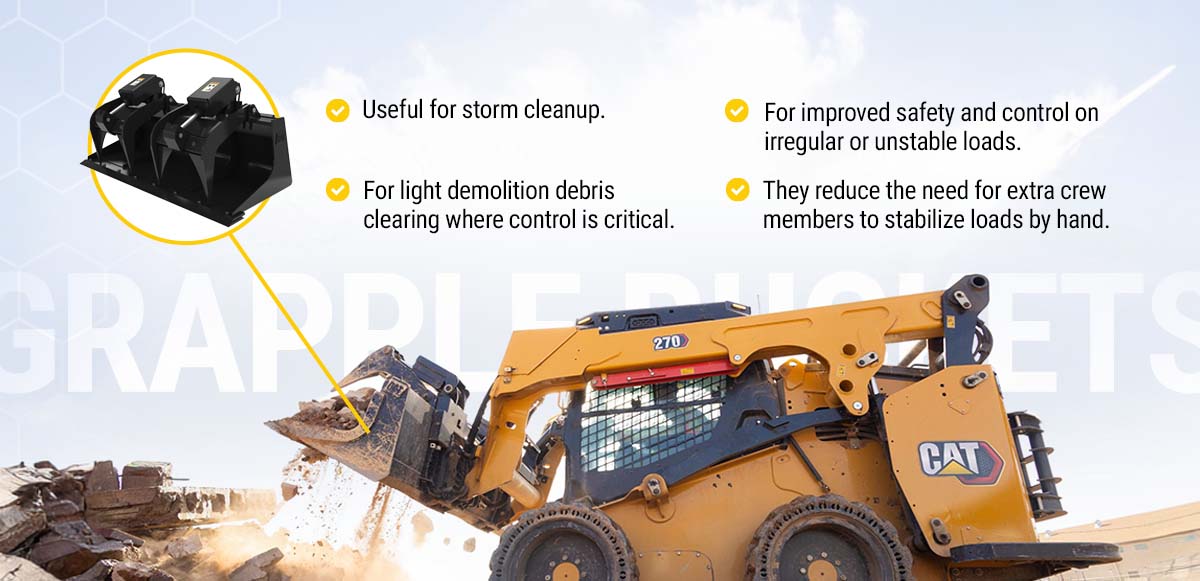
A grapple bucket incorporates hydraulic clamping to securely handle logs, brush piles, and debris from demolition sites that would shift or fall from a standard bucket. These specialized buckets improve both safety and control on irregular or unstable loads.
Benefits include:
- These buckets range from 62 to 74 inches with closed heights of 20.7-29.1 inches, depending on type.
- They reduce the need for extra crew members to stabilize loads by hand.
- They’re useful for storm cleanup and light demolition debris clearing where control is critical.
Multipurpose Buckets
Four-in-one buckets combine bucket, grapple, dozer, and grading functions in one attachment. A multipurpose bucket is valuable when a job requires frequent task changes.
Benefits include:
- One attachment replaces several tools, saving space and reducing change-outs.
- They’re available in various capacities to suit different needs.
How to Choose the Right Skid Steer Bucket
Use this checklist to match the bucket to your work and machine before purchase to ensure you get the best value.
Match the Bucket to Your Material
Material density and abrasiveness will largely influence your choice. Light material buckets struggle in wet clay or compacted soil because they lack penetration, and tooth buckets add unnecessary cost and wear when used on mulch or snow. Gravel and crushed stone wear edges faster than topsoil, so choose buckets with replaceable bolt-on edges and reinforced high-grade steel construction.
Consider Your Skid Steer’s Operating Capacity
Rated operating capacity is typically 50% of the tipping load. The bucket weight plus material weight must stay within this limit. Exceeding the rated capacity can cause instability and accelerate wear and tear. Use heaped capacity in your calculations and compare them with the published machine specifications.
Align the Bucket With Your Primary Application
Choose the bucket that optimizes the work you do most often. Utility buckets with moderate capacity and good visibility deliver strong results on grading-focused jobs. For bulk work with light materials, high-capacity light material buckets are easy to handle and save time. Avoid selecting a bucket for rare tasks at the expense of daily performance.
Consider Compatibility With Other Compact Equipment
The universal quick-attach system allows for fast swaps between machines and brands. A Cat® skid steer bucket can generally fit other equipment using the universal mount, increasing flexibility and resale value. Skid steers offer agility on firm surfaces, while compact track loaders provide better flotation, so consider the type of ground you work on most often.
The same bucket performs differently across platforms due to differences in the undercarriage. Make sure the bucket is suitable for the size of the machine. What would work well on a regular-sized machine may be less stable on a mini skid steer, for example.

Sign Up For Our Emails
Get the latest product updates and monthly specials