

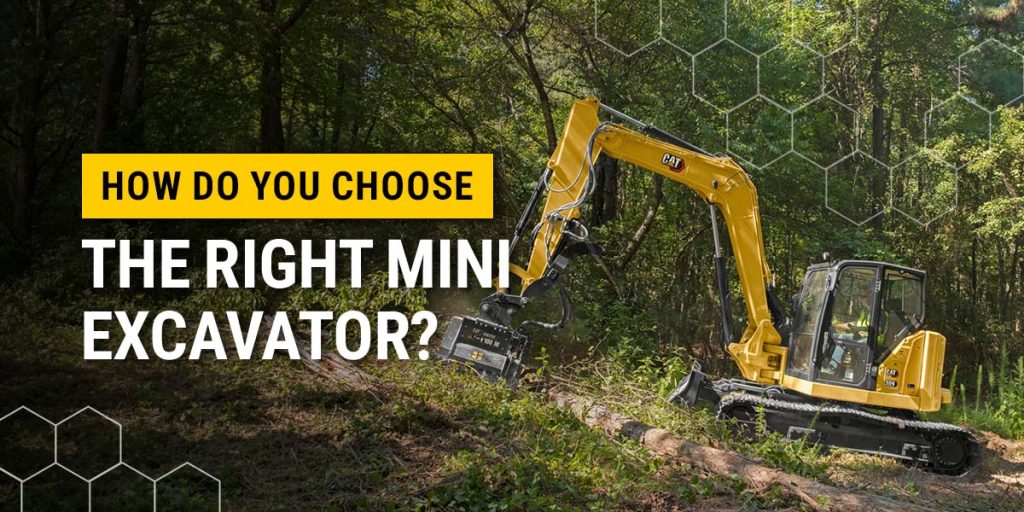
Every job runs better when the machine matches the work. The right mini excavator moves over tricky ground with ease and clears tight access points without a second thought, keeping fuel use, hours, and crew safety working in your favor.
Matching mini excavator uses, sizes, and specs to the job at hand is what separates a smooth site from a stalled one. Get those three factors right, and the rest of the job becomes a lot easier. Use this mini excavator guide to inform your decision-making process.
1. What a Mini Excavator Can Do
Mini excavator uses go beyond basic digging. The Cat® mini excavator lineup covers everything from utility work to demolition.
Utility Trenching
Mini excavators are the standard choice for digging trenches for water, sewer, and electrical lines. Small-class compact radius (CR) models reach dig depths of up to 8.3 feet for most shallow utility and water line runs, while mid-class Cat models reach 11.5 feet for deeper gas and sewer work. Zero-tail-swing models keep the counterweight within the track width, giving you a clear swing radius in tight urban utility corridors.
Landscaping and Site Prep
Mini excavators cover a range of landscaping and site prep tasks:
- Grading
- Installing drainage
- Removing trees
- Clearing debris
Their compact footprint extends residential and commercial landscaping jobs beyond the range of a full-size machine. This includes removing tree stumps and backfilling holes in tight yards. Compatible Cat mini excavator attachments — augers, hammers, and rippers — expand what the machine can do on a single site visit.
Tight-Access Demolition
Indoor and urban demo work calls for a different kind of machine. Common tight-access jobs include:
- Interior teardowns
- Residential demolition
- Alley and courtyard jobs that call for a smaller footprint
The retractable undercarriage on Cat CR models narrows enough to clear tight gates and site entrances. Zero-tail-swing design keeps the house within the track width during rotation and the counterweight clear of walls and fencing.
Foundations and Septic Systems
Mid-class machines are built for this work. The Cat 304 mini excavator reaches dig depths of 11.5 feet and lifts up to 4,262 pounds, covering most residential foundation and septic scopes right from the mini class.
2. Mini Excavator Sizes and Weight Classes
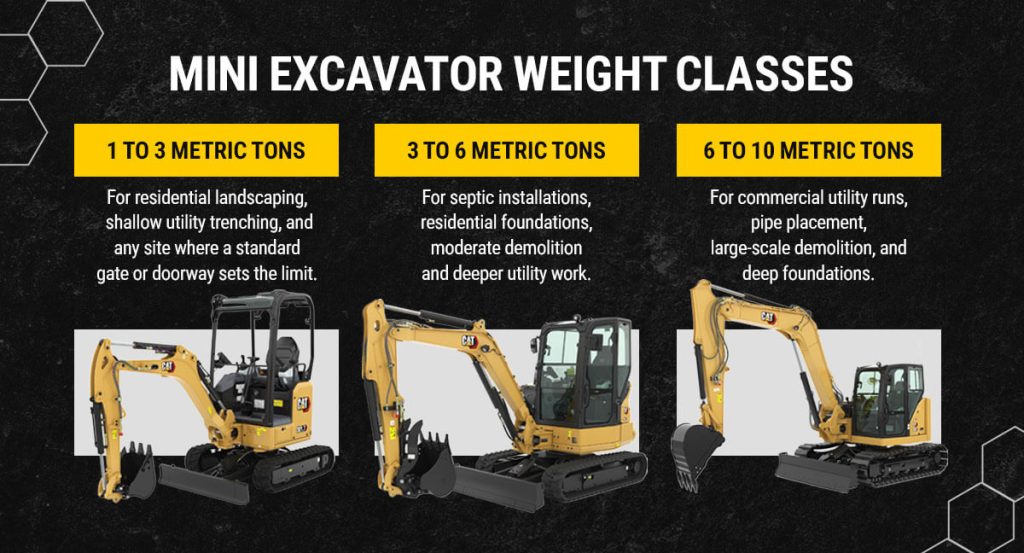
Once you know a mini excavator fits the work, size is the deciding factor that determines whether it fits the site. The Cat mini excavator lineup spans three practical weight bands.
1 to 3 Metric Tons
The smallest class is the access specialist, built for residential landscaping, shallow utility trenching, and any site where a standard gate or doorway sets the limit. The Cat 301.7 CR undercarriage retracts to 39 inches, making it easy to fit through a standard residential gate without modification. Its 8.3-foot dig depth comes with the lightest transport footprint of the three classes.
3 to 6 Metric Tons
This class is the sweet spot for most contractors, handling:
- Septic installations
- Residential foundations
- Moderate demolition
- Deeper utility work
The Cat 304 mini excavator reaches dig depths of 11.5 feet and lifts up to 4,262 pounds, and stepping up to the Cat 305 CR model pushes the max lift to 7,041 pounds. This is enough power for tougher terrain while still transporting on a standard trailer.
6 to 10 Metric Tons
The heavy end of the mini class includes machines like the Cat 309 CR. This model reaches a dig depth of 15.2 feet, while the Cat 310 mini excavator tops the range at 17.1 feet and offers roughly 11,975 pounds of max lift capacity. This class handles commercial utility runs, pipe placement, large-scale demolition, and deep foundations. Depending on haul distance, transporting these machines may call for a larger trailer and permits, so sizing correctly here keeps production on schedule.
3. Mini Excavator Specs You Need to Know
Weight class narrows the field, but four numbers decide whether a specific model earns a spot on the jobsite.
Dig Depth
Dig depth is the maximum vertical distance the bucket can reach below ground level. Across the Cat lineup, that range runs from 8.3 feet on the smallest CR models up to 17.1 feet on the largest mini excavator model.
Choose a machine whose maximum dig depth clears your required trench depth with room to spare, since grade variation and soft soil can quickly eat into that margin. Long stick configurations extend dig depth on most models while keeping you in the same weight class.
Lift Capacity
Mini excavator lift capacity is the machine’s ability to pick and place at the working radius — pipe sections, concrete forms, boulders, and precast units. Capacity decreases as the boom and stick extend, so confirm the rated capacity at your actual working radius rather than relying on the listed maximum.
Basically, that means the weight you can lift right at the machine is higher than what you can lift at full reach. Machines like the Cat 308 CR model and above lift more than 8,000 pounds at working radius, while smaller classes top out well below that.
Bucket Dimensions
Mini excavator bucket dimensions determine how precisely the machine works. On the narrow end, Cat digging buckets run 9 to 16 inches wide and are built for precision trenching with clean lines and minimal over-excavation. Wider buckets, up to 36 inches plus, move more material per pass for grading and general digging. The right size depends on the job at hand, and quick couplers make swapping between sizes fast on-site.
Tail Swing
Zero tail swing keeps the counterweight within the track width at all times. This design suits confined urban and residential sites, while conventional tail swing extends the counterweight beyond the tracks during rotation, trading extra clearance for greater stability on open sites. Cat CR models use the compact radius design, and operator familiarity with these controls builds fastest through hands-on training with a Cat product application specialist.
How Mini Excavators Stack up Against Skid Steers
When comparing mini excavators versus skid steers, both machines are compact and versatile, but they’re built for different kinds of work. A mini excavator digs down and lifts with reach, while a skid steer pushes and carries horizontally.
Mini excavators win on:
- Trenching
- Precision digging
- Confined demolition
- Sloped terrain work
Skid steers are best for:
- Pushing material
- Loading trucks
- Flat-surface grading
- Tight material transport
Many jobs call for one of each, so it pays to keep both machine types available for the tasks they handle best. If you’re weighing the rental option, our skid steer rental guide covers that decision in more depth.
Deciding to Rent or Buy a Mini Excavator
Whether to rent or buy depends on how often you need the machine and how much flexibility the job demands.
Opt to rent when:
- The job is short-term.
- You want flexibility to match the machine to a specific project.
- You want to try a model before buying.
Choose to buy when:
- The need is recurring.
- Ownership costs can be distributed across consistent project volume.
New, used, and rental Cat mini excavators cover both scenarios locally. Our excavator rental guide breaks down the entire decision-making process, including sizing, insurance, and training considerations.
Find the Right Mini Excavator at Thompson Tractor
When margins are tight and equipment decisions carry consequences, it’s crucial to work with a knowledgeable partner. Thompson Tractor is a full-service provider for new and used Cat mini excavators, plus rental availability through Thompson Rents. Every purchase is backed by parts and service support across Alabama and northwest Florida. We’ve built relationships in this region for more than 60 years, and our specialists are ready to help you match the right machine to your job.
Ready to see what fits? Browse our mini excavator inventory to compare sizes and specs for your next job.

Sign Up For Our Emails
Get the latest product updates and monthly specials